
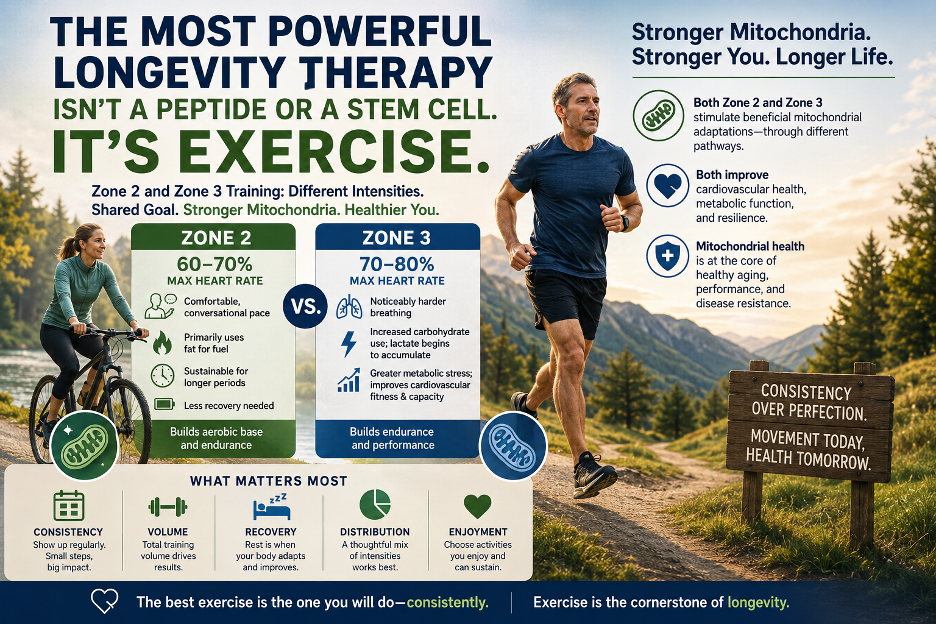
Many patients ask me what the single most important thing they can do to improve their health span is. They ask about peptides, stem cell therapies, hyperbaric oxygen (HBOT), and other advanced regenerative treatments. My answer is always the same: EXERCISE.
I recently read an excellent article that clearly explains the differences between Zone 2 and Zone 3 cardiovascular training in a practical, easy-to-understand way. Given how much attention Zone 2 training has received recently, I thought the article offered a refreshingly balanced perspective.
The authors describe Zone 2 as a comfortable, conversational pace—typically about 60–70% of your maximum heart rate—where the body relies more heavily on fat for fuel. Because the intensity is relatively low, these workouts can be sustained for longer periods, require less recovery, and help build a strong aerobic foundation.
Zone 3 represents a moderate increase in intensity, generally 70–80% of maximum heart rate. Breathing becomes noticeably heavier, carbohydrate use increases, lactate begins to accumulate, and the effort becomes more challenging while still remaining manageable for many people. This intensity places greater metabolic stress on the body and produces additional improvements in cardiovascular fitness and exercise capacity.
These differences in fuel use and metabolic stress are why the two training zones produce overlapping—but not identical—physiological adaptations. Both improve cardiovascular health and metabolic function, but they emphasize different aspects of endurance and energy metabolism.
One of the most interesting points the article makes is that it challenges the popular belief that Zone 2 is the only meaningful intensity for improving mitochondrial health. Instead, the authors explain that both Zone 2 and higher-intensity exercise stimulate beneficial mitochondrial adaptations, although through somewhat different physiological pathways. Because mitochondria are the energy-producing structures within our cells, maintaining their health is closely linked to healthy aging, physical performance, and resilience against disease.
The article also emphasizes that the benefits of exercise depend not only on intensity but also on overall training volume, consistency, recovery, and how different workouts are distributed throughout the week. Rather than chasing one “perfect” heart-rate zone, the authors suggest that a thoughtful combination of exercise intensities may provide the greatest long-term benefits for cardiovascular health, fitness, and longevity.
My takeaway from this article is that we sometimes spend too much time searching for the “perfect” exercise prescription. The evidence summarized by the authors suggests that consistency matters more than perfection. A balanced program that you enjoy and can sustain is likely to provide far greater long-term benefits than chasing a single ideal heart-rate zone. Remember that lifestyle interventions, especially exercise, remain the cornerstone of healthy aging. Here is the link to the specific article: https://www.timeline.com/blog/zone-2-vs-zone-3-for-mitochondrial-health
Thanks, Dr. Purita