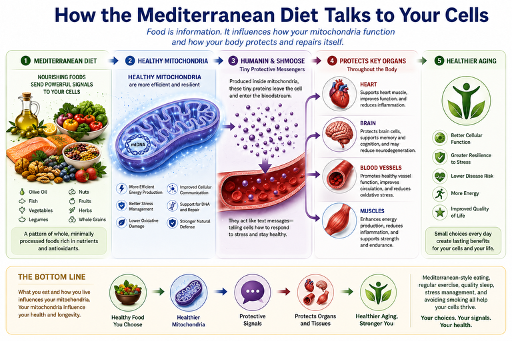
I read an interesting article on the Mediterranean diet and posted a synopsis on LinkedIn. For decades, scientists have known that the Mediterranean diet is associated with longer life, healthier hearts, and lower rates of dementia. But exactly how food produces these remarkable benefits has remained something of a mystery. New research is uncovering an exciting answer: tiny proteins produced inside our mitochondria may translate what we eat into biological signals that protect our cells and promote healthier aging.
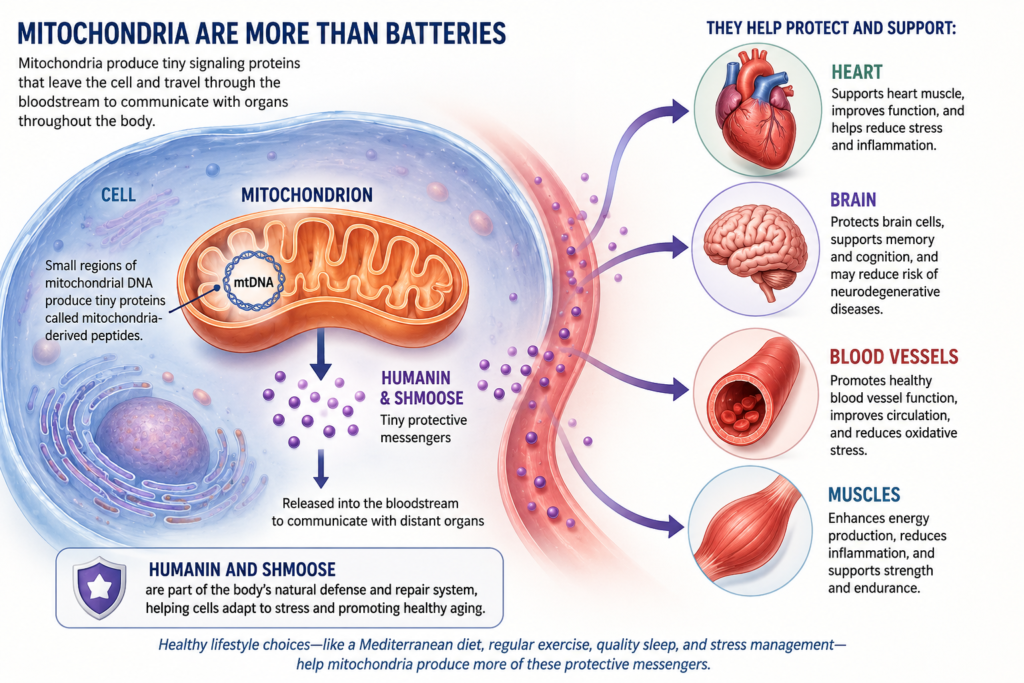
“Inside every mitochondrion is a tiny circle of DNA. For many years, scientists believed much of this DNA was largely nonfunctional. They have now discovered that some of these overlooked regions actually produce extremely small proteins sometimes only a few dozen amino acids long. Although tiny, these proteins act as chemical messengers, helping cells survive stress, repair themselves, and communicate with the rest of the body.”
Mitochondria are constantly “listening” to their environment. They sense the nutrients you eat, how much you exercise, whether you sleep well, your level of inflammation, and even psychological stress. They then adjust their behavior accordingly, producing more or fewer protective signaling molecules. In many ways, mitochondria act like cellular environmental sensors, translating your daily lifestyle choices into biological responses that influence health and aging.
Mitochondria Are More Than Batteries
For decades, biology textbooks described mitochondria as the cell’s power plants because they convert nutrients into ATP—the energy currency every cell uses to function.
Scientists now realize that mitochondria are much more than tiny power plants. They constantly monitor the cell’s health, detect stress, and communicate with the nucleus and other tissues throughout the body. In many ways, mitochondria act as miniature control centers, helping determine whether a cell repairs itself, survives injury, or eventually dies.
The Discovery That Changed Everything
One of the biggest surprises in modern biology is the discovery that mitochondria produce their own tiny signaling proteins. Scientists originally believed that mitochondrial DNA contained only enough genetic information to code for proteins involved in energy production. The remaining stretches of DNA were thought to be biologically unimportant. Over the past decade, researchers have discovered that hidden within this DNA are very small genes capable of producing tiny proteins called mitochondria-derived peptides, or MDPs. Although these peptides are much smaller than most proteins in the body, they can have surprisingly powerful effects on health. Humanin and SHMOOSE are two of the best-studied examples.
Why Size Doesn’t Matter
Most proteins in our bodies contain hundreds—or even thousands—of amino acids. Humanin is only 24 amino acids long. SHMOOSE is only slightly larger. Despite their tiny size, these molecules function as hormones. Once produced in the mitochondria, they leave the cell, enter the bloodstream, and deliver messages to distant organs. Think of them as text messages rather than construction workers. They don’t rebuild tissues themselves. Instead, they tell cells how to respond to stress more effectively.
Humanin: One of Your Body’s Natural Protectors
Humanin was discovered almost by accident while scientists were studying Alzheimer’s disease. Researchers noticed that this tiny peptide appeared to protect brain cells from many of the harmful processes associated with aging. Since then, Humanin has been shown in laboratory and animal studies to:
- Reduce oxidative stress
- Improve insulin sensitivity
- Protect heart muscle
- Help blood vessels function normally
- Reduce inflammation
- Support healthy brain cells
- Increase resistance to cellular stress
Interestingly, Humanin levels naturally decline with age, which may help explain why our tissues become more vulnerable over time.
Meet SHMOOSE
SHMOOSE was discovered relatively recently and is still under active investigation. Early research suggests it plays an important role in maintaining healthy mitochondria, particularly in nerve cells. Some studies have linked lower SHMOOSE levels to an increased risk of neurodegenerative diseases, including Alzheimer’s disease. Although researchers are only beginning to understand its full function, SHMOOSE appears to be another important member of the body’s natural repair and protection system.
Oxidative Stress: The Spark That Ages Cells
Every cell in your body constantly generates energy. As mitochondria produce this energy, they also create small amounts of highly reactive molecules called reactive oxygen species (ROS). Think of them as tiny sparks produced by an engine. A few sparks are perfectly normal and even useful because they help cells communicate. But if too many sparks accumulate, they begin to damage proteins, fats, DNA, and the mitochondria themselves. This gradual accumulation of damage is called oxidative stress and is believed to contribute to many age-related conditions, including heart disease, diabetes, arthritis, and cognitive decline. Your body has built-in antioxidant systems to keep these sparks under control. Diet, exercise, sleep, and healthy mitochondrial signaling all help maintain this balance.
How the Mediterranean Diet Fits In
One of the most exciting findings from this study is that people who closely followed a Mediterranean-style diet had significantly higher levels of Humanin and SHMOOSE. Researchers believe that nutrients found in foods such as extra-virgin olive oil, fatty fish, vegetables, legumes, nuts, and fruits create a healthier cellular environment. Rather than simply supplying vitamins and minerals, these foods appear to influence mitochondrial behavior. Healthier mitochondria produce stronger protective signals, while unhealthy diets may weaken this natural communication network. In other words, food doesn’t just fuel your body; it helps guide how your cells respond to stress and aging.
Your Diet Is Like Software for Your Cells
Many people think of food as fuel, like gasoline for a car. Modern science paints a much richer picture. Food is also information. Every meal sends biochemical signals that influence which genes are active, how mitochondria function, and whether cells shift toward repair or damage. Nutrients can affect inflammation, antioxidant defenses, and the production of protective molecules such as Humanin and SHMOOSE. This means your food choices do more than satisfy hunger; they constantly help program how your body functions at the cellular level. While no single meal can stop aging, years of healthy eating may gradually strengthen the systems that help your cells remain resilient.
While the findings are exciting, research on Humanin and SHMOOSE is still evolving. Most of the evidence comes from laboratory studies and observational human research. These discoveries do not replace the well-established benefits of eating a balanced Mediterranean-style diet, We cannot yet measure Humanin and SHMOOSE as treatments, but we can prescribe Humanin. We can influence the environment that supports their production. A Mediterranean-style diet, regular exercise, restorative sleep, stress management, and avoiding smoking all help maintain healthy mitochondria. Every healthy choice you make sends signals to your cells that may strengthen the body’s natural defense and repair systems.
exercising regularly, getting adequate sleep, and maintaining a healthy lifestyle, all of which remain the foundation of healthy aging. Dr. Purita