
You’re considering a stem cell or PRP (platelet-rich plasma) injection, and you need to know how recovery will fit around your life. When can you go back to work, exercise, or walk comfortably? Recovery depends on the type of treatment, the area treated, your condition, and your treatment plan.
This guide covers what to expect after treatment, how to plan your daily activities, and which symptoms need medical attention. At Pensum Regenerative Medicine in Grand Cayman, your clinician can explain the recovery guidance for your specific procedure.
Recovery Depends on the Treatment and the Area
No single recovery time applies to every stem cell or PRP patient. A knee joint injection and an elbow tendon injection can come with different restrictions. The type of procedure matters too. PRP is made from a blood sample. Some stem cell procedures involve collecting tissue, such as bone marrow or fat, from a second site. In that case you will have two areas to look after: the collection site and the treated area.
Recovering from the procedure itself is also different from improvement in the condition that led to treatment. Ask your clinician to answer these two questions separately. When should the initial soreness settle? When will they assess whether the treatment has helped? A date for returning to light activity does not promise that the underlying problem will have resolved.
The American Academy of Orthopaedic Surgeons’ PRP overview explains that the treatment area, general health, injury type, and preparation can affect results. Cell-based treatments vary in the same way. A friend’s experience can be useful to hear, but it should not set your own recovery deadline.
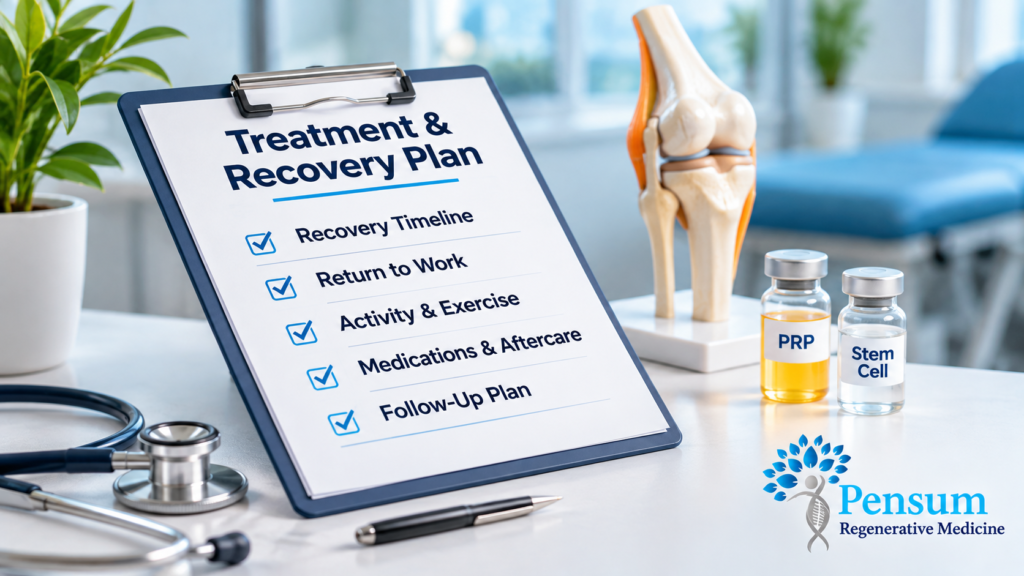
Before Treatment: Plan Around Your Real Routine
Start with the tasks that fill your day. Tell the treating team if your job involves lifting, long periods on your feet, stairs, driving, or repeated use of your hands. Mention any caring responsibilities that could make restrictions hard to follow.
If you are having a stem cell procedure, ask where any tissue will be collected from and how that might affect sitting, lying down, bending, or getting dressed in the first few days. Ask whether you will have local anaesthetic or sedation, and whether that changes your transport arrangements.
If possible, ask for written aftercare instructions before the appointment. Arrange transport home, help with shopping, and any changes you may need at work. You don’t need to predict every problem, but practical arrangements are easier to make before the procedure.
Tell the clinician about your medicines, allergies, recent antibiotics, and any possible infection. Don’t stop any prescribed medicine unless the prescriber has agreed.
Immediately After the Injection
Before you leave, confirm what the treating team wants you to do that day. Ask about dressings, washing, use of the treated limb, and whether you need any support. If tissue was collected, ask how to care for that site as well. Instructions for one joint, tendon, or collection site should not be applied to another.
Make sure you know how to contact the clinic if you’re unsure about a symptom, and ask for a way to reach someone outside opening hours. Keep the instructions somewhere easy to find rather than relying on memory after your appointment.
If someone is taking you home, share the team’s advice with them. Ask whether you can travel straight home and whether a longer journey needs extra planning.
The Early Days: Soreness and Daily Activities
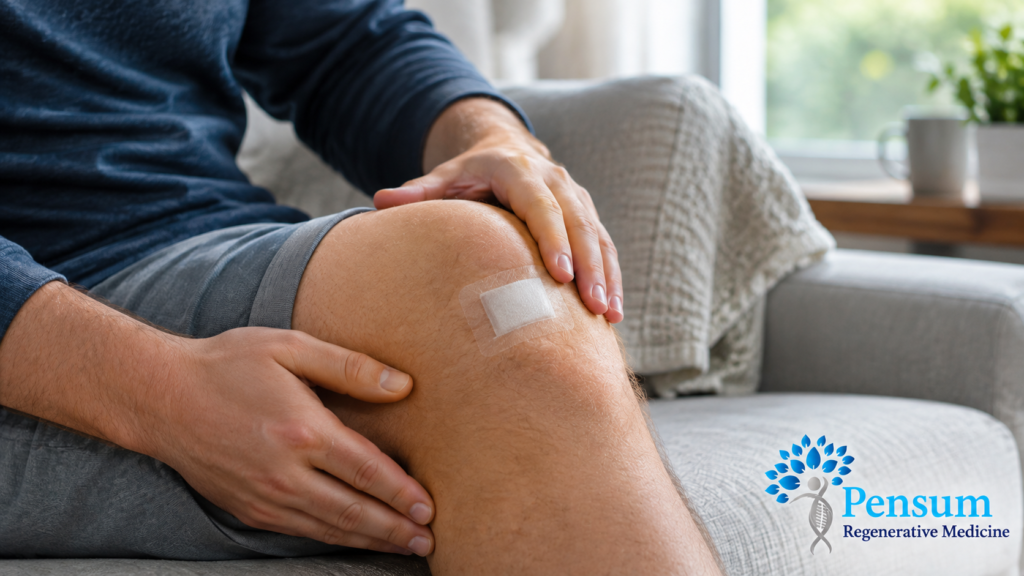
Some pain after a stem cell or PRP injection can happen. AAOS describes a possible early increase in pain after certain tendon injections and notes that any benefit may take several weeks to appear. Not every patient follows that pattern. After a stem cell procedure, the collection site may also be sore or bruised for a time.
Ask the clinician how much discomfort they expect after your procedure and when they want to hear from you. Pain is not proof that the injection is working. Equally, a lack of immediate improvement doesn’t tell you whether you will benefit later.
Let your own aftercare plan guide your activity. If an instruction such as “take it easy” feels unclear, ask for examples. Preparing a meal is very different from carrying heavy shopping or working a full shift.
Returning to Work Without Guessing
A useful return-to-work discussion starts with your actual duties, not your job title. Two people with the same job can have very different physical demands. Explain what you lift, how often you move, and whether you can change tasks for a while.
Ask whether a shorter day, modified duties, or time off is appropriate. Your answer may differ between a PRP injection and a stem cell procedure that involves tissue collection. If the team recommends restrictions, ask for a clear explanation you can share with your employer, and confirm when the restrictions will be reviewed.
Walking, Driving, and Getting Around
Before a lower-limb injection, or a procedure that collects tissue from the hip or abdomen, ask about walking distances, stairs, and any support the team may recommend. Describe your home layout and your daily travel. A plan that works in a single-level home may need changes if you use stairs often.
For driving, follow the treating clinician’s advice and the conditions of your insurance. For example, patients should not drive until they are comfortable and can control the vehicle safely. If you had sedation, ask specifically when you can drive again. Feeling better while sitting doesn’t mean every driving movement is safe.
If you’re travelling from elsewhere, discuss your travel plans before booking. Ask how follow-up will be arranged and whom to contact once you’re home. Don’t build a treatment schedule around a return-travel date that hasn’t been confirmed.
Exercise and Rehabilitation
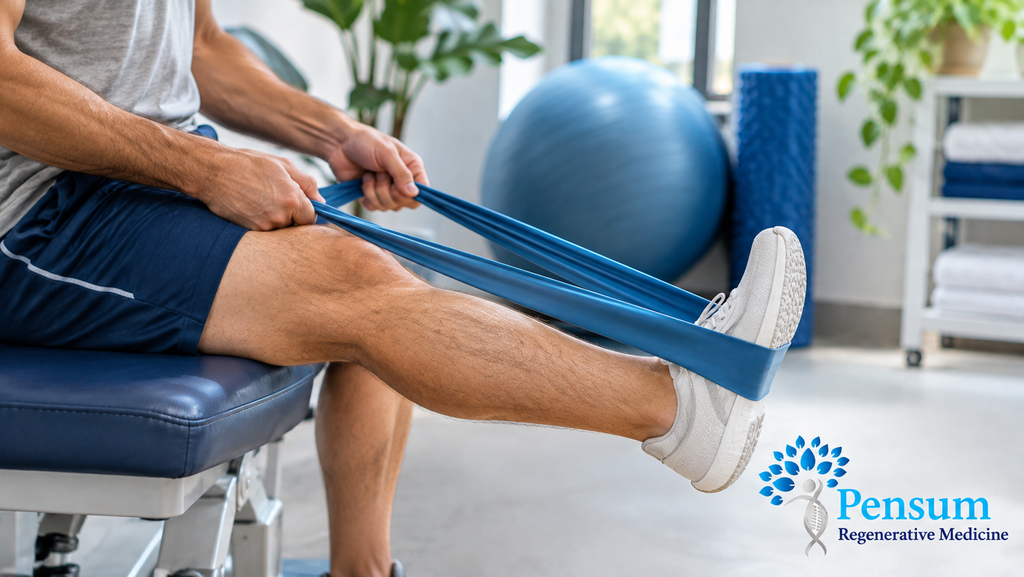
Your rehabilitation plan should say which movements to start, which activities to avoid, and how your progress will be reviewed. Ask when your first rehabilitation appointment should be and who will guide the next stage.
Tell the team about your sporting goals before treatment. A short walk, a gym session, and competitive sport are separate decisions. Ask which milestones the team will use before clearing you for more demanding activity.
Pain Relief and Aftercare Questions
Ask which pain-relief options are right for you and whether any medicines need special instructions. Advice can differ between PRP and stem cell protocols, and between patients. Your other health conditions and prescriptions also matter.
Don’t rely on general online advice to stop aspirin, a blood thinner, or any other prescribed medicine. If two clinicians seem to give different advice, ask them to agree on a plan together, and keep the final instructions in writing.
If discomfort is making it hard to follow your recovery plan, contact the treating team. Rather than just asking whether the pain is normal, explain what you’re feeling and which tasks you can’t manage.
Warning Signs That Need Prompt Medical Advice
Needle procedures carry risks, including bleeding, infection, and injury to nearby structures. Stem cell procedures carry similar risks at the injection site and, where tissue is collected, at the collection site. Using your own blood or cells does not remove these risks.
Seek prompt medical advice if you notice increasing redness, heat, swelling, fever, discharge, or pain that becomes severe at either site. Seek urgent care if you feel seriously unwell. If you’re worried about a possible complication, don’t wait for your routine follow-up.
Before you leave the clinic, ask the treating team to explain their warning signs and how to contact them. The instructions should make clear when to call the clinic and when to use urgent medical services.
Follow-Up: Measure Function as Well as Pain
Choose a few everyday tasks to discuss at follow-up. For example, you might note how far you can walk comfortably, whether your sleep is disturbed, or how a familiar hand task feels. Keep the record simple enough to keep up.
Ask when the team expects to assess your response and what they will do if progress is limited. Any further treatment, whether a repeat PRP injection, a stem cell procedure, or another option, should start with a fresh discussion of your symptoms, goals, and choices.
Remember that getting back to activity and responding to treatment are different outcomes. Being back at work doesn’t necessarily mean the original pain has improved, and one good day doesn’t mean the result will last.
Plan Your Recovery With Pensum
A clear plan should answer practical questions about work, transport, exercise, medicines, and follow-up. It should also tell you who to contact if your symptoms don’t match the guidance you were given.
If you’re considering treatment, review Pensum’s stem cell and PRP treatment options and book a consultation to discuss your condition. Pensum Regenerative Medicine in Grand Cayman can explain the assessment and the recovery advice specific to your procedure.