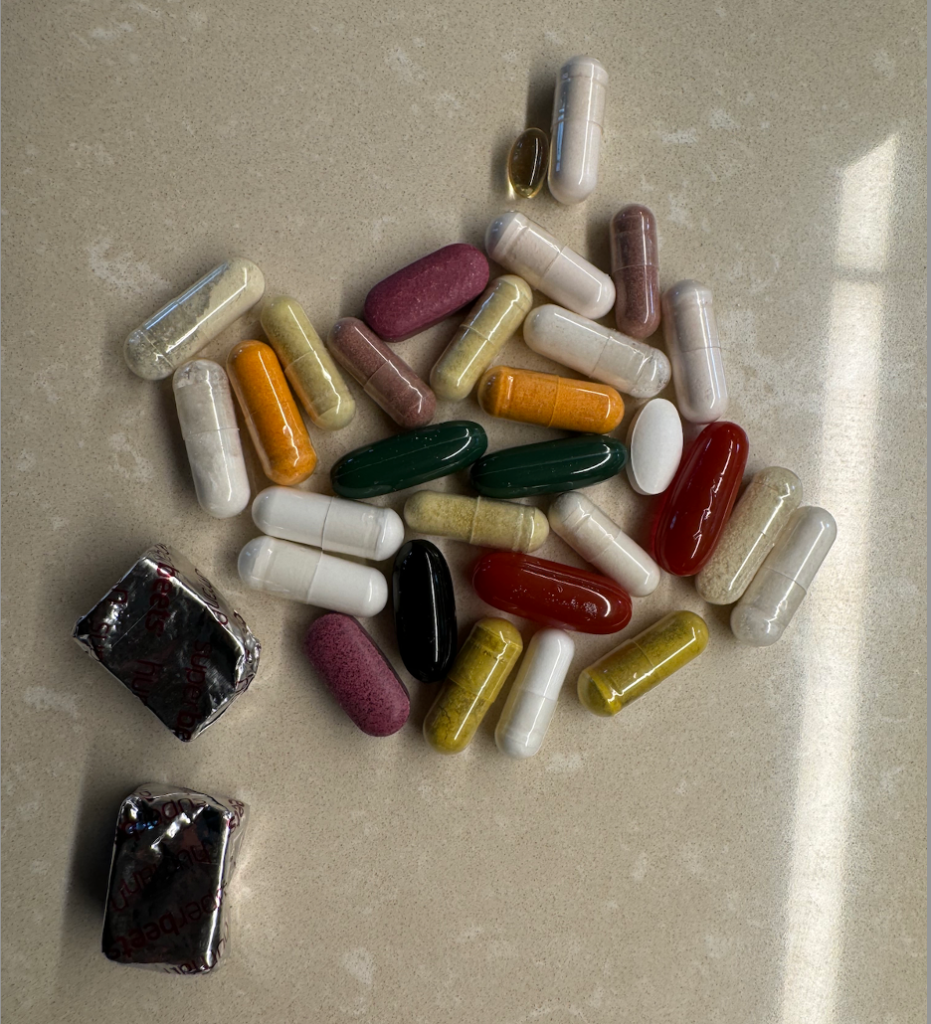
I am often asked which supplements I recommend and which supplements I personally take. I typically take a core group of supplements at least five days per week and give my body two days off, usually on the weekend, unless I’m traveling. These are not the only supplements I use, but they form the foundation of my program to slow aging and reduce chronic inflammation—what many researchers now call “inflammaging.”
Over the years, I’ve assessed my biological age using various tests. In one test, my intracellular NAD level was in the range often seen in teenagers. In another, my level of the anti-aging protein Klotho placed me at the 90th percentile relative to 18- to 35-year-old males. I am obviously older than that, and while no single test defines “true” biological age, I would much rather see those numbers than the opposite. I strongly believe that this overall approach—lifestyle plus targeted supplements—has played a major role.
As we age, our bodies undergo changes in energy production, repair capacity, and immune balance that can impact health and vitality. While aging is inevitable, emerging research points to strategies that may slow certain aspects of aging and promote better function for longer. One such strategy is the intelligent use of supplements that target key cellular pathways involved in longevity biology. Here are my top 15 anti-aging supplements, along with how they may work.
1. Resveratrol and Pterostilbene
Resveratrol is a polyphenol antioxidant found in red grapes, berries, peanuts, and red wine. It has been shown to activate sirtuin proteins such as SIRT1, which are involved in DNA repair, cell survival, metabolism, and other longevity pathways. Resveratrol also exhibits antioxidant and anti-inflammatory effects that may help counteract oxidative stress and chronic inflammation, both major drivers of aging and age-related disease.
Resveratrol has demonstrated neuroprotective properties in preclinical and early human studies, suggesting possible benefits for brain aging and cognitive decline. Its main practical limitation is poor oral bioavailability. Pterostilbene is a closely related compound that is more lipophilic and may have better absorption, with similar sirtuin-activating and antioxidant effects. Both compounds are best taken with fat (e.g., olive oil) to enhance absorption. In selected patients, I also use IV resveratrol when higher or more rapid tissue levels are desired.
Curcumin is the primary bioactive compound in turmeric and is well known for its potent antioxidant and anti-inflammatory properties. Chronic low-grade inflammation is a major contributor to aging, and curcumin can help dampen this by inhibiting pro-inflammatory enzymes and modulating key inflammatory signaling pathways. At a cellular level, curcumin activates NRF2, a master regulator of the body’s own antioxidant and cytoprotective enzymes, thereby reducing oxidative stress and indirectly lowering systemic inflammation.
By reducing oxidative and inflammatory damage, curcumin helps slow the “inflammaging” process and may support healthier aging of tissues throughout the body. Preclinical and clinical studies suggest benefits for cognitive function, joint health, and metabolic parameters, in part by reducing brain and systemic inflammatory markers. Curcumin’s absorption is limited in standard forms, so I often prefer enhanced-bioavailability formulations and, in some clinical scenarios, IV curcumin.
CoQ10 is a naturally occurring cofactor in the mitochondrial electron transport chain and is essential for cellular energy production. As we age, CoQ10 levels tend to decline, which can contribute to fatigue, reduced exercise capacity, and increased oxidative stress. Supplementing CoQ10 can support mitochondrial function, improve ATP production, and protect mitochondrial membranes from oxidative damage.
CoQ10 also acts as an antioxidant in lipid environments, helping to protect cell membranes and lipoproteins from free-radical injury. Clinical studies have shown that CoQ10 may support cardiovascular health, improve certain measures of cardiac function, and reduce markers of inflammation and oxidative stress in older adults. For patients with statin use, heart disease, or significant fatigue, I frequently consider CoQ10, sometimes in IV form when gastrointestinal absorption is a concern.
4. Nicotinamide Riboside (NR), NMN, and NAD
Nicotinamide riboside (NR) and nicotinamide mononucleotide (NMN) are vitamin B3 derivatives that act as precursors to NAD+, a central coenzyme in energy metabolism, DNA repair, and cellular stress responses. NAD+ levels decline markedly with age—by roughly half every two decades in some tissues—contributing to mitochondrial dysfunction, impaired DNA repair, and loss of metabolic flexibility.[2]
By boosting NAD+ levels, NR and NMN may help restore mitochondrial function, support sirtuin activity, and improve cellular resilience to stress. In my practice, I also use IV NAD+ in carefully selected patients, along with newer, more rapidly delivered NAD precursors such as Niagen. Because NAD metabolism increases methyl demand, I often pair NAD-boosting strategies with methyl donors such as TMG (see below) to help preserve healthy methylation and avoid accumulation of nicotinamide breakdown products.
Spermidine is a naturally occurring polyamine present in cells and in foods such as wheat germ, soy, and certain cheeses. It has gained attention for its ability to stimulate autophagy, the cellular “recycling” process that helps remove damaged proteins and organelles. Autophagy activity declines with age, leading to the accumulation of cellular junk and contributing to functional decline and age-related disease.
By inducing autophagy, spermidine helps restore this cleanup process and may promote healthier cellular homeostasis and longevity. In animal models, spermidine-rich diets have been associated with lifespan extension and improved cardiovascular health. One notable feature is that spermidine appears to mimic some of the beneficial effects of intermittent fasting on autophagy, making it a promising option for patients who struggle with extended fasting protocols.
If I were asked which single biological target I most want to improve in my patients, the answer would be the mitochondria. You are only as healthy as your mitochondria. Urolithin A is a postbiotic metabolite produced by certain gut bacteria from dietary precursors in pomegranates and some berries. Many people lack sufficient levels of these specific microbes and therefore cannot generate meaningful amounts of Urolithin A from diet alone.[3][4][5]
Urolithin A is a potent inducer of mitophagy, the selective autophagy of damaged mitochondria. By enhancing mitophagy, Urolithin A promotes removal of dysfunctional mitochondria and stimulates mitochondrial renewal, improving cellular energy production and resilience. Human trials in middle-aged and older adults have shown that Urolithin A can improve muscle function and markers of mitochondrial health and can remodel immune-cell mitochondrial function and inflammatory profiles. For patients with fatigue, sarcopenia, or mitochondrial issues, I consider Urolithin A a cornerstone mitophagy-support supplement.[4][5][3]
Fisetin is a flavonoid found in strawberries, apples, onions, and other fruits and vegetables. It has attracted interest as a senolytic agent, meaning it selectively targets and removes senescent (“zombie”) cells. Senescent cells are metabolically active but no longer divide; they secrete inflammatory factors (the SASP) that can drive chronic inflammation, tissue damage, and many aspects of age-related decline.
We require senescent cells for wound healing and tumor suppression; however, their number and secretory activity increase with age. Fisetin has been shown in preclinical models to induce apoptosis preferentially in senescent cells, reducing their accumulation and the inflammatory environment they create. Many clinicians, including me, prefer Fisetin in combination formulas that include additional senolytic or senomorphic agents; one such product is SenUltra, which I often recommend for appropriately screened patients.
Alpha-lipoic acid is a small, sulfur-containing antioxidant that can function in both water and lipid environments. It helps regenerate and recycle other antioxidants such as vitamins C and E and glutathione, amplifying the body’s endogenous antioxidant network. ALA may reduce oxidative stress and free radical damage to lipids, proteins, and DNA, which are core mechanisms underlying aging and many age-related diseases.
ALA also exhibits anti-inflammatory effects and has been studied for its ability to improve insulin sensitivity and glycemic control, which is important given the link between metabolic dysfunction and accelerated aging. Clinically, ALA is widely used for neuropathic symptoms, especially in diabetic neuropathy, where it can reduce pain and improve nerve function in many patients. I use both oral and IV ALA, particularly in patients with neuropathy or significant metabolic stress.
9. Nitric Oxide Support (Neo-40)
Nitric oxide (NO) is a gaseous signaling molecule that plays a crucial role in vascular tone, endothelial function, immune signaling, and cellular communication. NO production declines with age, contributing to endothelial dysfunction, increased blood pressure, reduced exercise capacity, and greater cardiovascular risk. Neo-40 is a patented nitric oxide–generating supplement developed by HumanN that is designed to restore NO bioavailability through nitrate–nitrite–NO pathways.
By improving nitric oxide status, Neo-40 may help support vasodilation, enhance blood flow and oxygen delivery, and improve endurance and recovery. NO also supports healthy endothelial function and may have downstream benefits on stem cell mobilization and tissue repair, which is one reason I became interested in it years ago. In my lectures, I often summarize regenerative medicine with one simple phrase: “CELLS, not doctors, heal patients.” Supporting NO is one way to create a more favorable environment for these cells to perform their functions.
Berberine is an isoquinoline alkaloid found in plants such as barberry, goldenseal, and tree turmeric. It is best known for activating AMPK (AMP-activated protein kinase), a metabolic master switch that helps regulate energy balance, glucose and lipid metabolism, and mitochondrial biogenesis. By activating AMPK, berberine can improve insulin sensitivity, lower blood glucose, and favorably impact lipid profiles, all of which are important in reducing metabolic stress and age-related cardiometabolic disease.[6]
Beyond its metabolic effects, berberine also has antioxidant and anti-inflammatory properties and can modulate gut microbiota composition. Many longevity researchers and clinicians view berberine as a more physiologic alternative to metformin for people without diabetes, because it may provide similar AMPK-mediated benefits without some of metformin’s potential downsides on exercise adaptations and NAD metabolism. For patients with metabolic syndrome, prediabetes, or insulin resistance, berberine is often one of my first-line nutraceuticals.
Omega-3 fatty acids—particularly EPA and DHA found in fatty fish and high-quality fish oil—are well established for their anti-inflammatory and cardioprotective properties. Chronic, low-grade inflammation is implicated in a wide range of age-related diseases, including cardiovascular disease, cognitive decline, arthritis, and some cancers. By shifting the eicosanoid balance toward anti-inflammatory and pro-resolving mediators, omega-3s help calm this chronic inflammatory background.
EPA and DHA also support brain structure and function, improve endothelial health, and may favorably affect gene expression related to cell survival, oxidative stress, and inflammation. We now appreciate that the cell membrane is critical to cellular function; maintaining a healthy membrane lipid composition with omega-3s supports receptor function, signaling, and resilience under stress. A practical pearl: high-quality fish oil is best stored in the freezer and taken directly from the freezer to reduce oxidation and minimize any “fishy” aftertaste.
EGCG (epigallocatechin gallate) is the primary catechin in green tea and is a powerful antioxidant and signaling molecule. It helps neutralize free radicals and modulates pathways involved in inflammation, cell survival, and metabolism. EGCG has been shown to support cardiovascular health by modestly reducing blood pressure and LDL cholesterol and by improving endothelial function in some studies.
EGCG may also assist with weight management by modestly increasing thermogenesis and fat oxidation, particularly when combined with lifestyle interventions. Emerging research suggests that EGCG can help regulate blood sugar, support liver health, and may exert neuroprotective effects relevant to age-related cognitive decline. In selected patients, I use oral EGCG as part of cardiometabolic and brain health programs and, in special cases, IV EGCG.
13. Trimethylglycine (TMG/Betaine)
Trimethylglycine (TMG), also known as betaine, is a naturally occurring methyl donor found in beets, spinach, and whole grains. It supports healthy methylation by donating methyl groups, converting homocysteine back to methionine, thereby helping to maintain normal homocysteine levels and supporting cardiovascular and brain health with aging. TMG also contributes to the generation of S-adenosylmethionine (SAM), a key methyl donor for DNA and protein methylation, making it highly relevant to epigenetic aging and biological age clocks.
For patients using NAD-boosting strategies (NR, NMN, IV NAD), TMG is especially useful because NAD metabolism increases methyl demand; co-supplementing with TMG helps preserve methylation capacity and supports clearance of nicotinamide metabolites. Recent experimental and translational work has described betaine as an “exercise mimetic,” since it reproduces several long-term exercise–like benefits in aging models—reducing inflammation, improving mitochondrial signaling, and attenuating tissue aging markers. Early human and animal data also suggest that TMG may improve exercise performance, body composition, and metabolic health, making it a versatile adjunct in a comprehensive anti-aging program. Decisions regarding dosing and the combination of TMG with other methyl donors (e.g., folate or B12) should be individualized and guided by a physician.
14. Vitamin D3 (A Hormone-Like Nutrient)
Although traditionally classified as a vitamin, vitamin D3 is better understood as a fat-soluble secosteroid hormone synthesized in the skin from cholesterol and then activated in the liver and kidneys. Its active form, calcitriol, binds the vitamin D receptor (VDR), a nuclear receptor that regulates the expression of hundreds of genes involved in calcium and phosphate balance, bone health, muscle function, immune regulation, and more.
Vitamin D deficiency is common in older adults and is associated with frailty, increased infections, low-grade inflammation, and impaired vaccine responses. Restoring adequate vitamin D levels may support immune homeostasis, reduce fracture risk when combined with calcium in individuals with deficiency, and modestly lower overall and cancer mortality in some populations. Because vitamin D behaves more like a hormone than a simple nutrient, dosing should be personalized and guided by blood levels, with periodic monitoring to avoid both deficiency and excess.
15. GlyNAC (Glycine + N-Acetylcysteine)
GlyNAC combines glycine and N-acetylcysteine to provide the key building blocks for glutathione, the body’s master intracellular antioxidant. With aging, glutathione levels decline, oxidative stress increases, and mitochondrial function worsens, contributing to many hallmarks of aging, including impaired energy production, chronic inflammation, and genomic damage. GlyNAC helps restore glutathione levels and directly supports mitochondrial health and redox balance.
In animal models, GlyNAC supplementation corrects glutathione deficiency, reverses mitochondrial dysfunction, reduces oxidative stress, lowers inflammation, and has been reported to extend lifespan by approximately 20–25%. Early clinical trials in older adults indicate that GlyNAC can improve glutathione status, reduce oxidative stress, enhance mitochondrial function, and favorably affect multiple aging-related outcomes, including insulin resistance, endothelial dysfunction, inflammation, cognition, strength, gait speed, body composition, and exercise capacity. I view GlyNAC as a targeted mitochondrial and redox-support tool, particularly useful in older individuals with elevated oxidative stress, cardiometabolic disease, or functional decline, and I recommend its use under medical supervision, with attention to dose and duration.
Lifestyle, Safety, and The “Most Important Supplement
While these supplements show promising anti-aging potential, none should be viewed as a panacea or a substitute for a healthy lifestyle. They are tools that can complement—never substitute for—a foundation of nutrient-dense nutrition, regular movement, stress management, and adequate sleep.
It is essential to consult a physician before starting a comprehensive supplement program, especially if you take prescription medications or have chronic medical conditions. Some of these compounds can act as mild anticoagulants or affect blood pressure, blood glucose, or liver enzyme systems, and may interact with blood thinners, antihypertensives, antidiabetic medications, and other drugs.
The Most Important Anti-Aging Supplement: Exercise
I have saved the most important supplement for last. The most effective anti-aging “supplement” we know of is not in a capsule or an IV bag—it is exercise. Consistent physical activity improves mitochondrial function, reduces chronic inflammation, enhances insulin sensitivity, supports brain health, and favorably modulates many of the same cellular pathways targeted by the supplements above. No pill can fully replace the broad benefits of moving your body. I view these supplements as tools to support and enhance what exercise is already doing—not as a substitute for it.
The good news is that many of these supplements are now available through our clinic and website for patients who have been appropriately evaluated and are good candidates.
Thanks,
Dr. Purita
Key Pathways and Targets Table
| Supplement | Primary Pathways/Targets | Main Anti-Aging Focus |
| Resveratrol / Pterostilbene | Sirtuins (SIRT1), antioxidant, anti-inflammatory | Genomic stability, metabolic health, neuroprotection |
| Curcumin | NRF2 activation, NF-κB modulation, antioxidant | Inflammaging, oxidative stress, brain and joint health |
| CoQ10 | Mitochondrial ETC, antioxidant | Mitochondrial energy, cardiovascular and muscle function |
| NR / NMN / NAD | NAD+ biosynthesis, sirtuins, PARPs | DNA repair, mitochondrial function, metabolic resilience |
| Spermidine | Autophagy induction | Cellular cleanup, proteostasis, cardiovascular aging |
| Urolithin A | Mitophagy, mitochondrial biogenesis | Mitochondrial quality, muscle and immune aging |
| Fisetin | Senolytic activity on senescent cells | Senescent cell burden, chronic inflammation |
| Alpha-Lipoic Acid | Antioxidant recycling, insulin sensitivity | Oxidative stress, neuropathy, metabolic health |
| Nitric Oxide (Neo-40) | NO signaling, endothelial function | Vascular health, blood flow, exercise capacity |
| Berberine | AMPK activation, gut microbiome modulation | Metabolic syndrome, glucose and lipid regulation[ |
| Omega-3 Fatty Acids | Pro-resolving mediators, membrane fluidity | Cardiovascular, brain, and membrane health |
| Green Tea Extract (EGCG) | Antioxidant, anti-inflammatory, metabolic pathways | Cardiometabolic health, liver support, brain aging |
| TMG / Betaine | Methylation, homocysteine, AMPK/SIRT1/PGC-1α | Epigenetic aging, vascular health, “exercise mimetic” |
| Vitamin D3 | VDR-mediated gene regulation, calcium homeostasis | Bone, muscle, immune function, inflammaging |
| GlyNAC | Glutathione synthesis, mitochondrial redox balance | Oxidative stress, mitochondrial function, multi-system aging |